EventsVenues

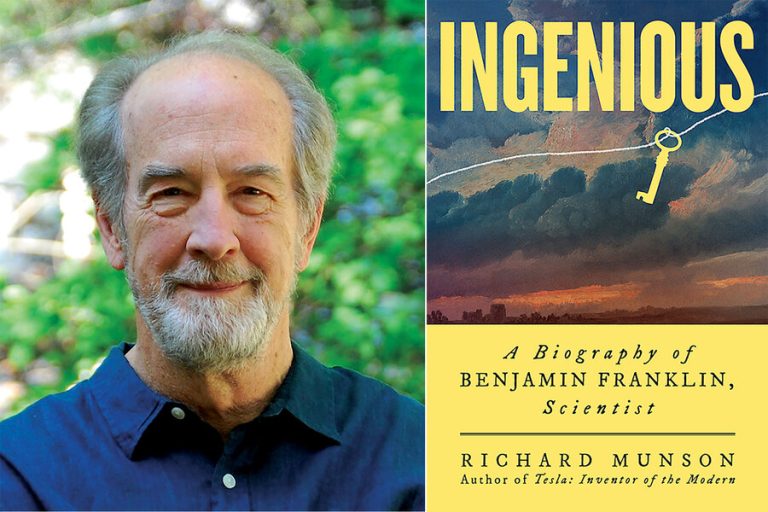
Richard Munson

An American author and clean energy advocate. With an interest in innovators, Munson also wrote “Tech to Table: 25 Innovators Reimagining Food” (Island Press, 2021) and “Tesla: Inventor of the Modern” (Norton, 2018) He is the author of five other books with topics that range from U.S. government energy policy to profiles of tycoon George Fabyan and oceanographer Jacques Cousteau.

His latest book, “Ingenious: A Biography of Benjamin Franklin, Scientist” was released by W.W. Norton & Company in November 2024. In a starred review, Publishers Weekly called it an “electrifying portrait. … Munson proves there’s reason yet to revisit the much-studied statesman.”

The dramatic story of an ingenious man who explained nature and created a country.

Benjamin Franklin was one of the preeminent scientists of his time. Driven by curiosity, he conducted cutting-edge research on electricity, heat, ocean currents, weather patterns, chemical bonds, and plants. But today, Franklin is remembered more for his political prowess and diplomatic achievements than his scientific creativity.

In this incisive and rich account of Benjamin Franklin’s life and career, Richard Munson will discuss this vital part of Franklin’s story, reveals his modern relevance, and offers a compelling portrait of a shrewd experimenter, clever innovator, and visionary physicist whose fame opened doors to negotiate French support and funding for American independence.

Munson’s riveting narrative will explore how science underpins Franklin’s entire story―from tradesman to inventor to nation-founder―and argues that Franklin’s political life cannot be understood without giving proper credit to his scientific accomplishments.

September 24, 2026

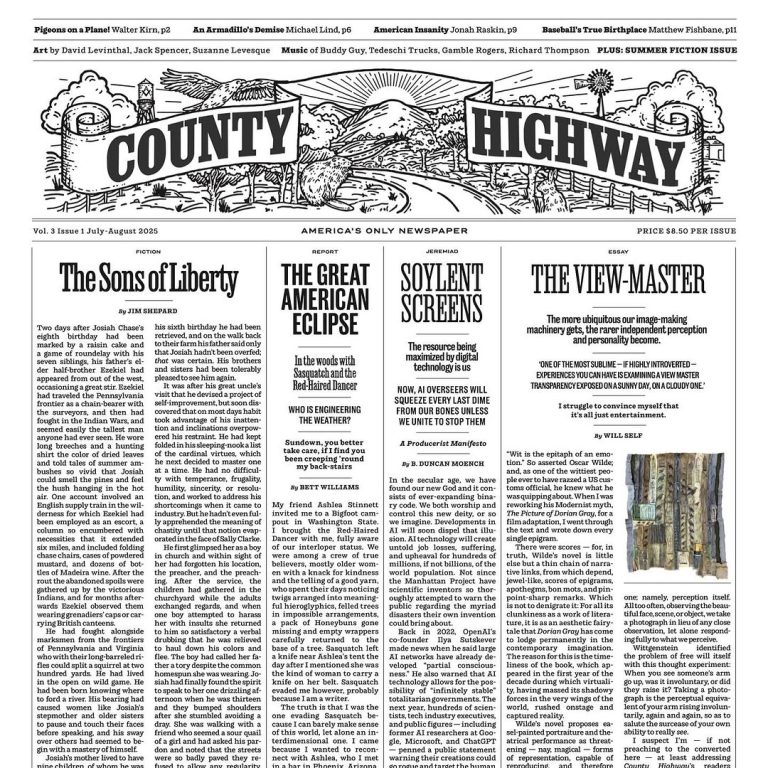
County Highway

County Highway is a 20-page broadsheet produced by actual human beings, containing the best new writing you will encounter about America. It features reports on the political and spiritual crises that are gripping our country and their deeper cultural and historical sources; regular columns about agriculture, civil liberties, animals, herbal medicine, and living off the grid, mentally and physically; essays about literature and art, and an entire section devoted to music.

In an age where newspapers are no longer available, this newspaper comes out six times a year and is delivered to your home in a transparent envelope. This talk will explain how this newspaper has been successful when others have failed.

September 25, 2026

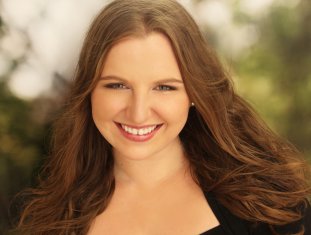
Louisa Waycott with Tom Stanfield

Soloist – The Great American Song Book

Louisa Waycott is a mezzo-soprano from Sun Valley, Idaho.  She grew up in the rainforest in Venezuela and Brazil before spending her teenage years in the Rocky Mountains of Idaho. She is currently based out of Washington D.C. Ms. Waycott has a deep love with music that started with her studies of cello, piano, and musical theater at a young age.  She continued to study both instruments and played cello for The Sao Paolo Youth Symphony Orchestra in Brazil.  She was incredibly lucky to spend high school in a beautiful small town that devoted lots of energy to the arts and participated with Caritas Chorale, St. Thomas Playhouse, Summer Valley Music Festival, Nexstage Theater, Shakespeare Theater, and Community School. Just in four years she performed roles in Godspell, Jesus Christ Superstar, Wizard of Oz, Pippin, Joseph and the Amazing Technicolored Dreamcoat, Annie, Boys from Syracuse, Pirates of Penzance, Kiss Me Kate, Gypsy, The Fantasticks, and The Who’sTommy.

Louisa found her love of opera after graduate school.Since her graduate studies Louisa has performed all over the United States and in Europe. Highlights have included performing Madame de la Haltière with Miami Summer Music Festival in Massenet’s Cendrillon, Zita in Puccini’s Gianni Schicchi and covering Donna Elvira in Mozart’s Don Giovanni with Prague Summer Nights Festival in the Czech Republic, Emma Goldman in a brand new jazz opera Love Songs, Mermaid in Weber’s Oberon and the Drummer in Ullmann’s Emperor of Atlantis with The In Series, Flora in Verdi’s La Traviata with Opera Camerata, and she made her debut with Inscape Chamber Orchestra in 2018 by performing Mahler’s Das Lied Von Der Erde. Louisa has been singing with The Washington National Opera for SIX straight seasons! Making her role debut and ensemble debut in the same year. She performed as a red bedazzled sheep and many other fun characters in Bernstein’s Candide and has sung in the ensemble of Aida, Don Carlo, La Traviata, Otello, Faust, Samson et Delila, Il Trovatore, Carmen, Cosi Fan Tutte, and Tosca. During Covid Louisa was lucky enough to work with Annapolis Opera on their virtual production of Acis and Galatea. During 2021/22 season she made her role debut of Tisbe in Cenerentola with Annapolis Opera.

The “Great American Songbook” is the canon of the most important and influential American popular songs and jazz standards from the early 20th century that have stood the test of time in their life and legacy. Often referred to as “American Standards”, the songs published during the Golden Age of this genre include those popular and enduring tunes from the 1920s to the 1950s that were created for Broadway theatremusical theatre, and Hollywood musical film.[1]

Tom Stanfield is a familiar musical presence in the Lake Geneva area, where he performs piano, vocals, and horn at local favorites such as The Abbey Resort, the Baker House, and Niche Café & Wine Bar. He is a versatile accompanist who brings warmth, charm, and solid musicianship to every performance.

September 26, 2026

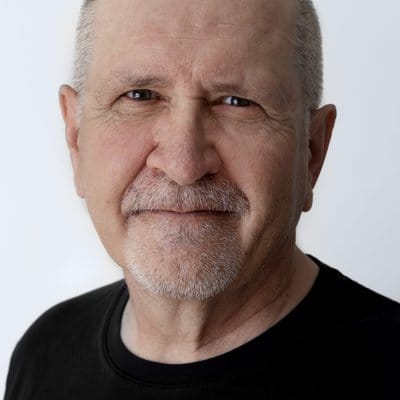
Robert Sharoff with William Zbaren and Tim Samuelson

Chicago-based architectural writer and author, he has written for a variety of publications including the New York Times, the Washington Post, the Chicago Tribune, and Chicago Magazine.

The Wrigley Building: The Making of an Icon. An in-depth look at America’s historic skyscraper and Chicago’s most iconic building.

Robert Sharoff will discuss the captivating story of the spectacular architecture of the century-old Wrigley Building—its design, construction, and enduring significance as one of Chicago’s most emblematic buildings. Through meticulous research and spectacular photography, the book unearths a century’s worth of architectural, social, and business history, shedding light on many aspects of the Wrigley Building for the first time.

The Wrigley represents the high-water mark of Beaux Arts Classicism in the city, a gleaming white palazzo at the head of Chicago’s grandest boulevard, Michigan Avenue. With lavish terra-cotta ornamentation, it was Chicago’s tallest building when it opened in 1921. The book focuses on the intertwined stories of William Wrigley Jr., the larger-than-life founder of the chewing gum empire, and Charles Gerhard Beersman, the relatively unknown architect who, mentored by architect Julia Morgan, brought the building to life.

With stunning new photography alongside archival images, renderings, and original blueprints and drawings, this volume is a must-have for any architecture enthusiast. It unveils a fresh perspective on this architectural marvel as well as a wealth of fascinating social history illuminating the building’s significance as more than just a structural landmark but as a nexus of Chicago’s cultural, social, and business evolution. 

William Zbaren is an award-winning architectural photographer whose work has been featured in the New York Times, Architectural Record, Wall Street Journal, and other publications.  His books include American City: St. Louis Architecture (Images Publishing Group), American City: Detroit Architecture 1845-2005 (Wayne State University Press), Krueck & Sexton: A Study in Light (Distributed Art Publishers), and Lucien Lagrange: The Search for Elegance (Images Publishing Group).

Tim Samuelson is a distinguished Chicago cultural historian known for his decades‑long work documenting and interpreting the city’s architectural and artistic heritage. As Chicago’s first official Cultural Historian, he curated major exhibitions, advised preservation efforts, and became a widely respected authority on the work of Louis Sullivan and the evolution of the city’s built environment. His research, public programs, and archival leadership have made him a central figure in preserving and communicating Chicago’s cultural history.

September 27, 2026
The Riviera

(262) 344-8246